


Sport & Leisure

Modular Buildings for Sport and Leisure Use

Typical uses:

Modular sports buildings are typically considered where traditional construction is constrained by cost, programme, or site limitations. Rather than serving as short-term solutions, they provide a practical, long-term alternative that allows sports facilities to be delivered more efficiently while still meeting the functional and environmental demands of modern sport.
They are commonly used to deliver covered indoor playing space, including dedicated sports halls and covered padel courts, within programmes and budgets that would otherwise restrict permanent development.

Get In Touch

Sport and Leisure Buildings


Sports Facility Design Considerations

Sport and leisure environments place specific demands on buildings: clear internal space for play, appropriate height and span for different activities, safe circulation for players and spectators, and layouts that support both structured sport and informal use. Buildings must integrate with existing facilities while providing consistent, safe conditions for regular use.

The type of sport being played has a direct impact on internal layout and fit-out. Requirements can include rebound walls, suitable lighting for visibility and play, and integrated storage for equipment so that playing areas remain clear and adaptable. In many cases, a simple, well-proportioned playing space supported by adjacent storage is key to day-to-day usability.

Clear span and overall width are important considerations, particularly for court-based sports. Building widths of up to 30 metres are well suited to a wide range of indoor sports, training facilities, and padel courts, but may influence suitability for certain full-width pitch cover applications.

Internal conditions are also a key consideration. Sports activities involving sustained physical exertion, high occupancy, or frequent use can introduce moisture, noise, and heat build-up within the space. The way a building is insulated, ventilated, and finished should reflect how it will be used day to day, not just how it looks on paper.

Our modular buildings for sport and leisure use are available in three building types, allowing the structure to be matched precisely to operational requirements:

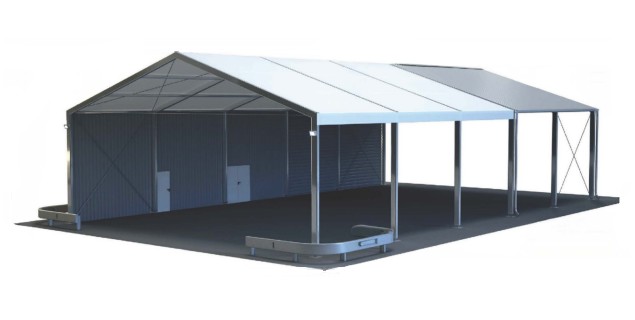
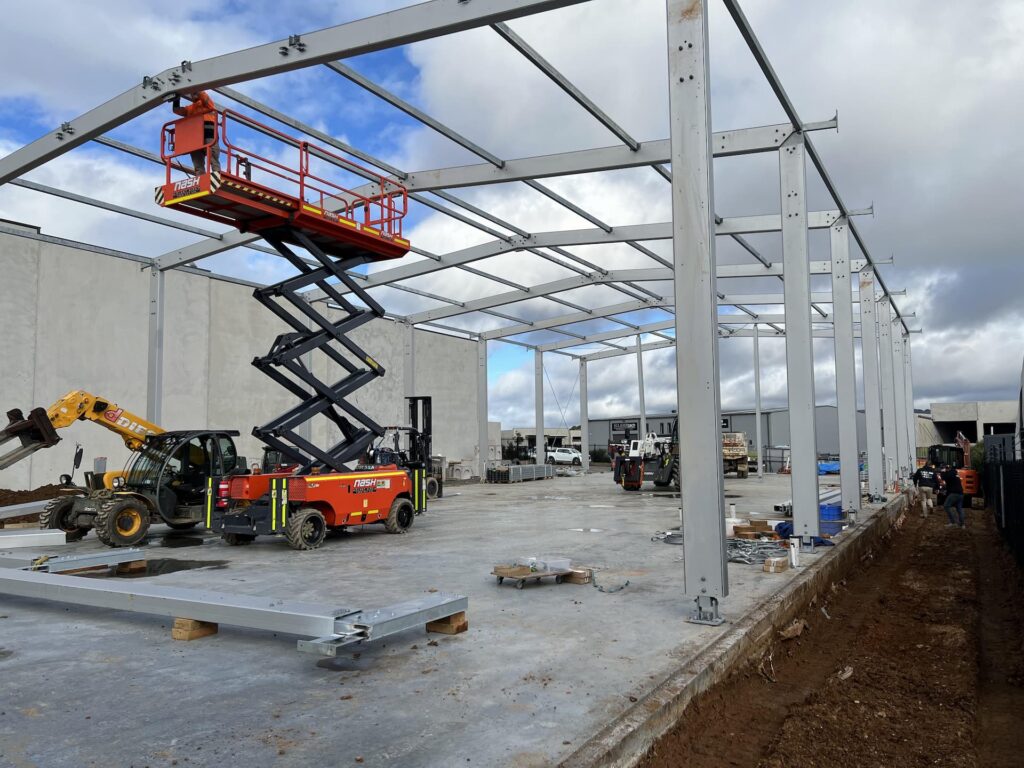
Canopy sports buildings

Used where overhead cover is required over existing courts or playing areas. In padel applications, canopies can incorporate partial walling to limit wind-driven rain and surface water entering the court, while maintaining airflow and visibility. This approach helps protect playing conditions without fully enclosing the space.

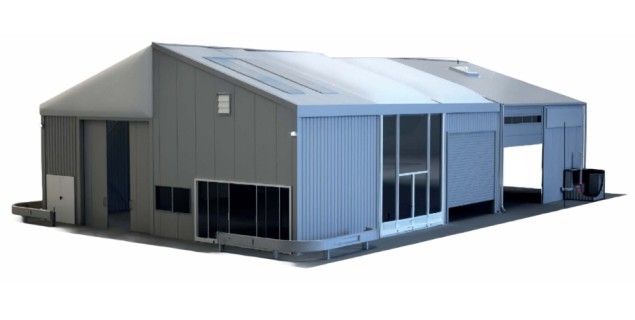
Non-insulated sports buildings

Provide enclosed playing space at ambient temperature. Suitable where heating is not required, or where buildings are used intermittently. Wall and roof specification can be selected to balance durability, running costs, and acoustic performance depending on the sport.

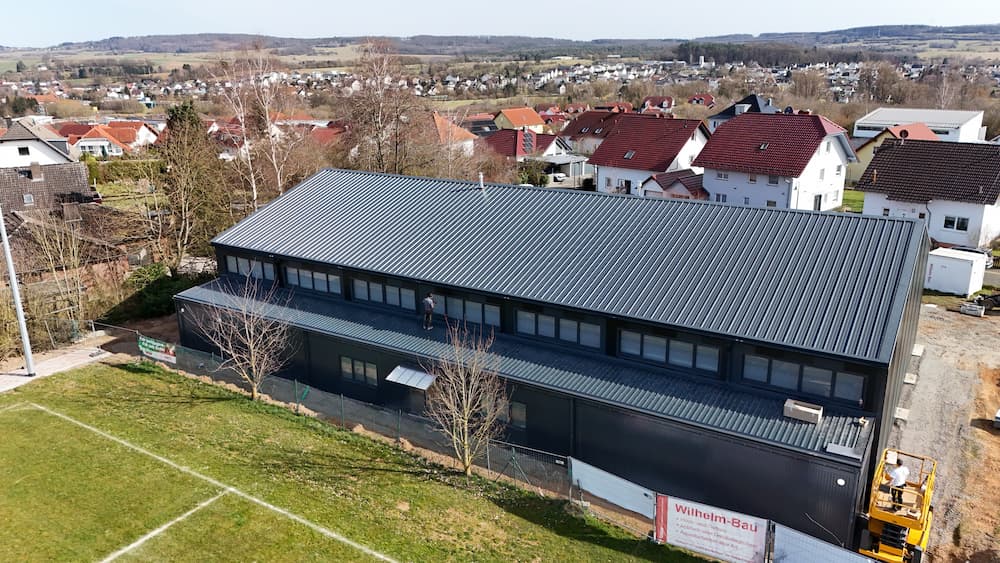
Insulated sports buildings

Used where facilities are occupied for extended periods or where more consistent internal conditions are required. Recommended for most sports halls, where insulation supports comfort, condensation control, and more predictable acoustic behaviour.

Selecting the right structure type at the outset ensures the facility performs as intended without unnecessary build or operating cost.

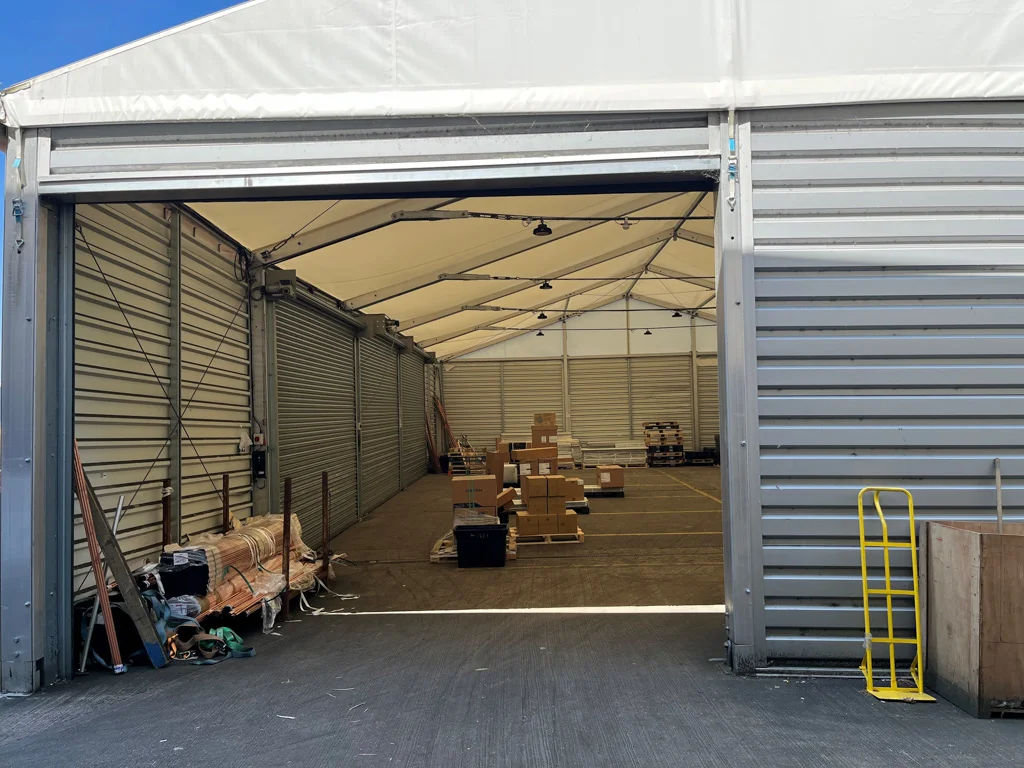
Industrial Canopy

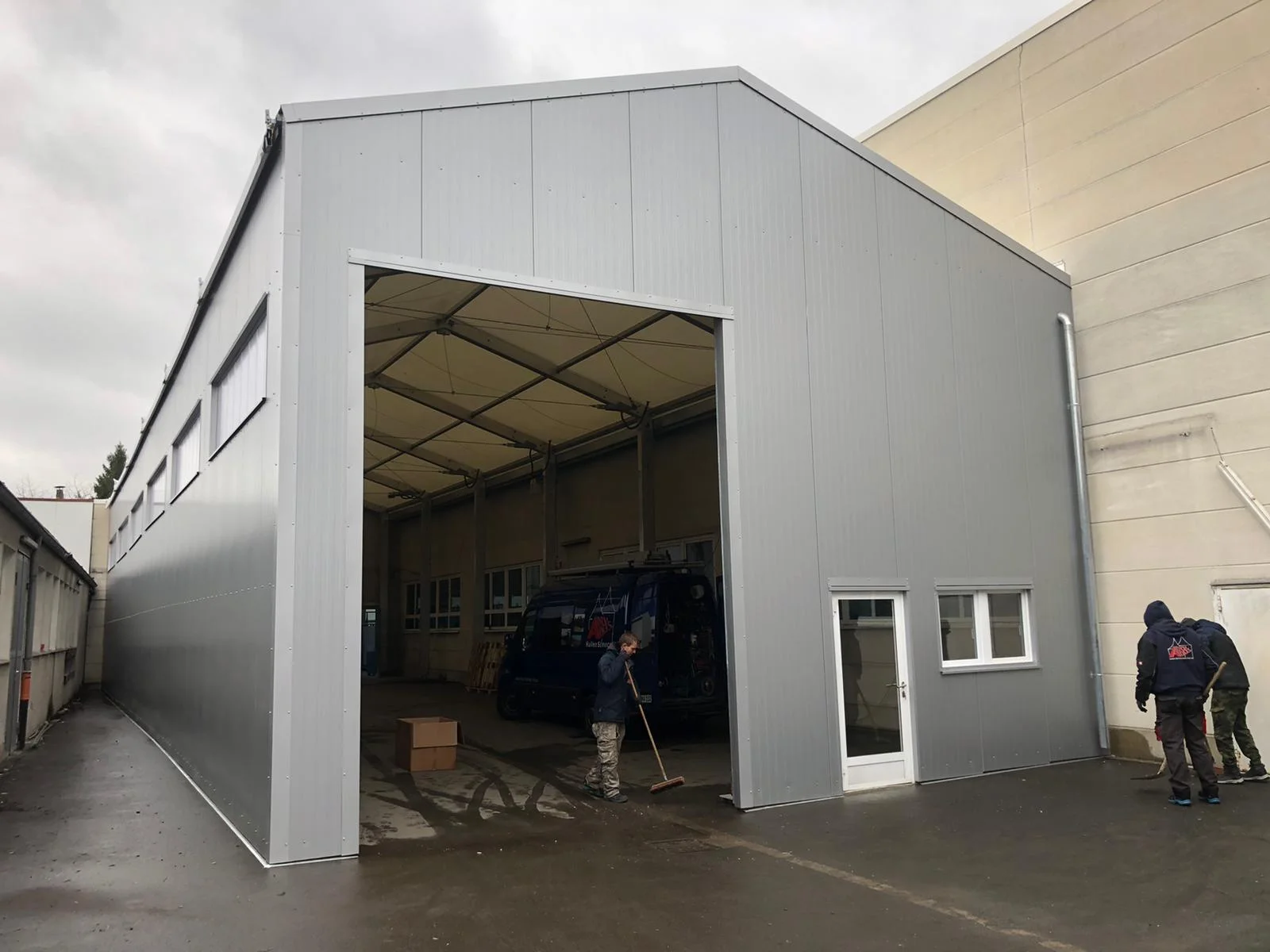
Uninsulated Building

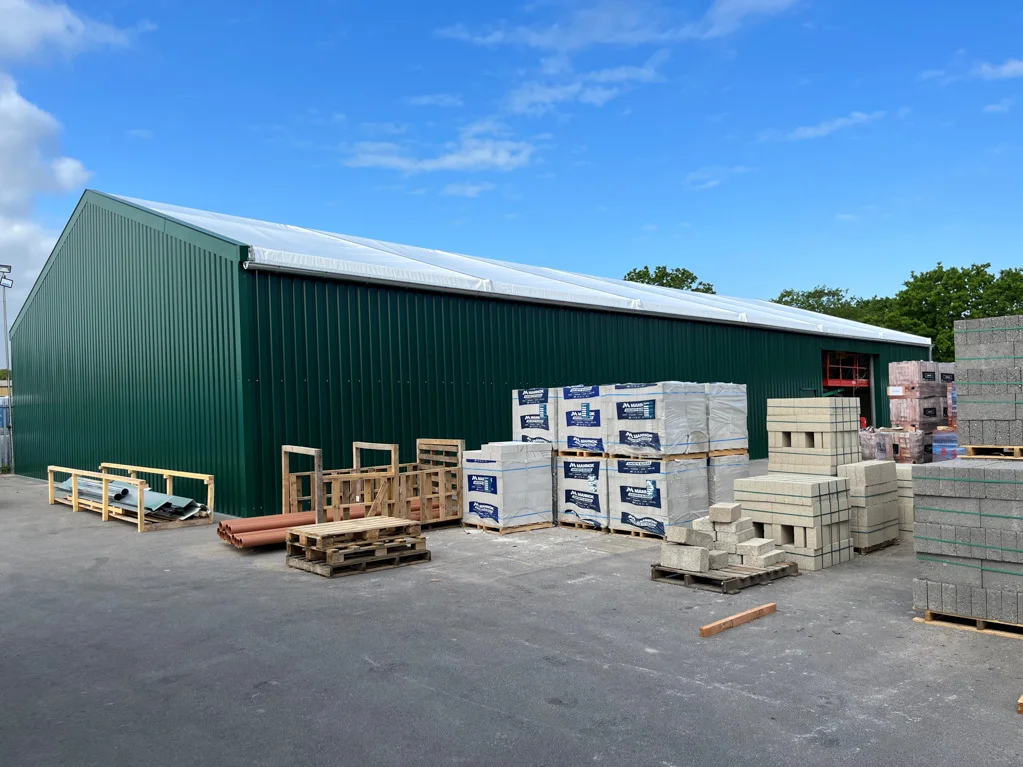
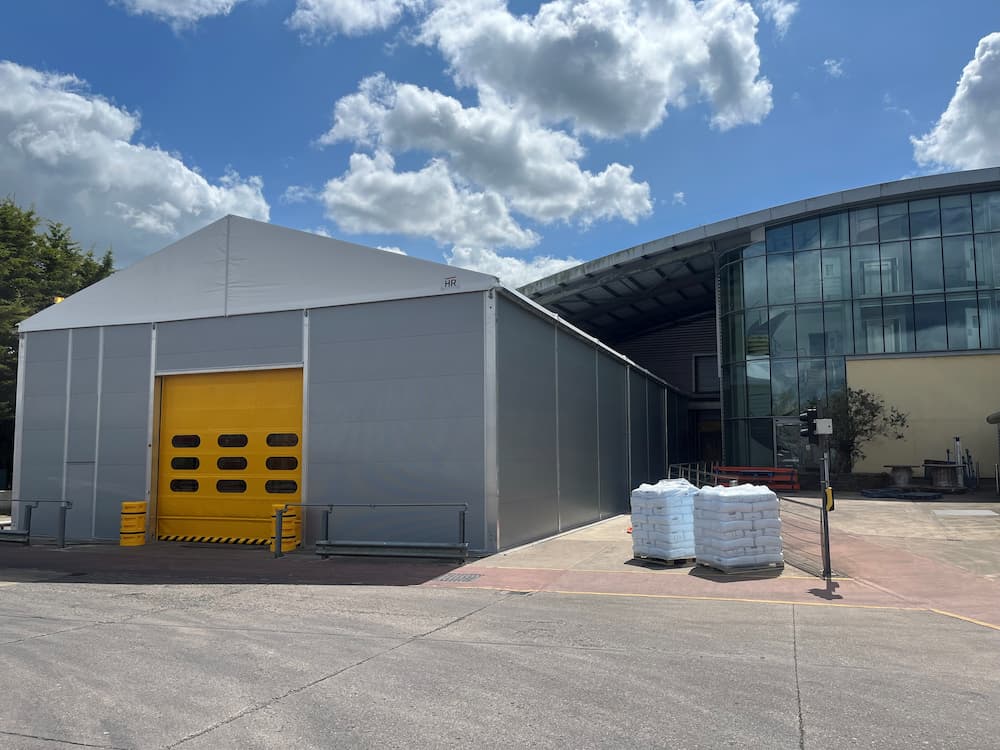
Insulated Building

360 Tour

Take a look inside our buildings and discover what is possible with HR-Structures.

Exploring this way gives you a realistic view of our construction methods so you can develop concrete ideas for your own project.

Interim lecture theatre for Police courses

Interim sports hall in lightweight construction

The Benefits of Aluminium Framed Buildings

Our cost-effective aluminium framed buildings can be erected quickly in just a few days. Low transport and assembly costs help keep the overall cost of temporary buildings below comparable traditionally built permanent alternatives.

Building Design for High-Performance Sports Use

Modular sports buildings are designed to function as complete, finished facilities rather than temporary enclosures. Clear internal space allows courts, run-off areas, and equipment to be laid out correctly, while height and span are configured to suit the sport being played and the level of use expected.

The internal environment plays a significant role in how a sports facility performs day to day. Insulation levels, ventilation strategy, and building use all influence comfort, running costs, and usability. In many sports environments, particularly padel and multi-use halls, full heating may not always be required. However, appropriate insulation can still be important for managing condensation and maintaining consistent internal conditions during regular use.

Internal fit-out should be guided by both playability and safety. Lighting needs to support clear visibility for players, while wall finishes and rebound characteristics should suit the sport being played. In court-based sports, rebound walls not only support continuous play but also act as a safety measure, reducing the risk of collision with the primary structure. Integrated storage for equipment helps keep playing areas clear, supporting safer movement and more flexible use of the space

These design considerations ensure the completed building provides a high-quality sporting environment from day one, delivering a practical, long-term facility that balances performance, cost, and day-to-day usability.

Need Advice?

If you’d like guidance on selecting the most appropriate modular sports building, speak to our team. We’ll advise based on the type of sport, expected usage, acoustic and environmental considerations, site constraints, and long-term operating requirements.

Next Steps

We can provide an early-stage project report outlining a suitable building approach and a ballpark cost range to support feasibility, funding discussions, and internal approvals.
This can then be followed by a free site visit. After the site visit, we produce a project-specific report based on confirmed requirements, site conditions, and intended use.

Want to know more?

If you’d like a deeper understanding of how we support projects beyond the structure itself, the links below explain our approach.

Testimonials

Read what our customers have to say

Contact us

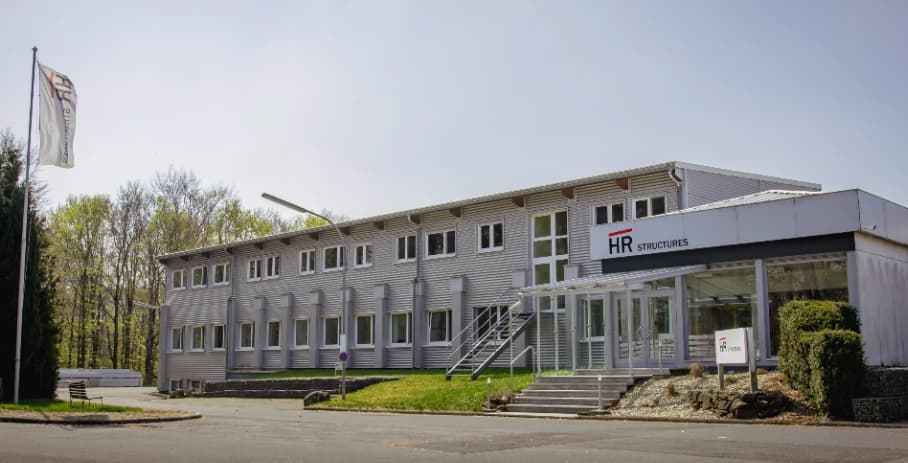
We manufacture all of our aluminium framed structures in our production facility in Germany. With a highly qualified team of industry experts, we manage everything from planning, design, manufacturing, delivery to site and assembly of the finished industrial structures.