Protection for Temperature-Sensitive Goods
Insulated Industrial Buildings
- Insulated prefabricated buildings
- Effective temperature protection for sensitive goods
- Reduced energy consumption when heating the building
- Better internal acoustics
- Complete service from advice to completed construction
- Made in Germany. Quality and reliability from our own production facility
How Are Our Aluminium Framed Industrial Buildings Insulated?
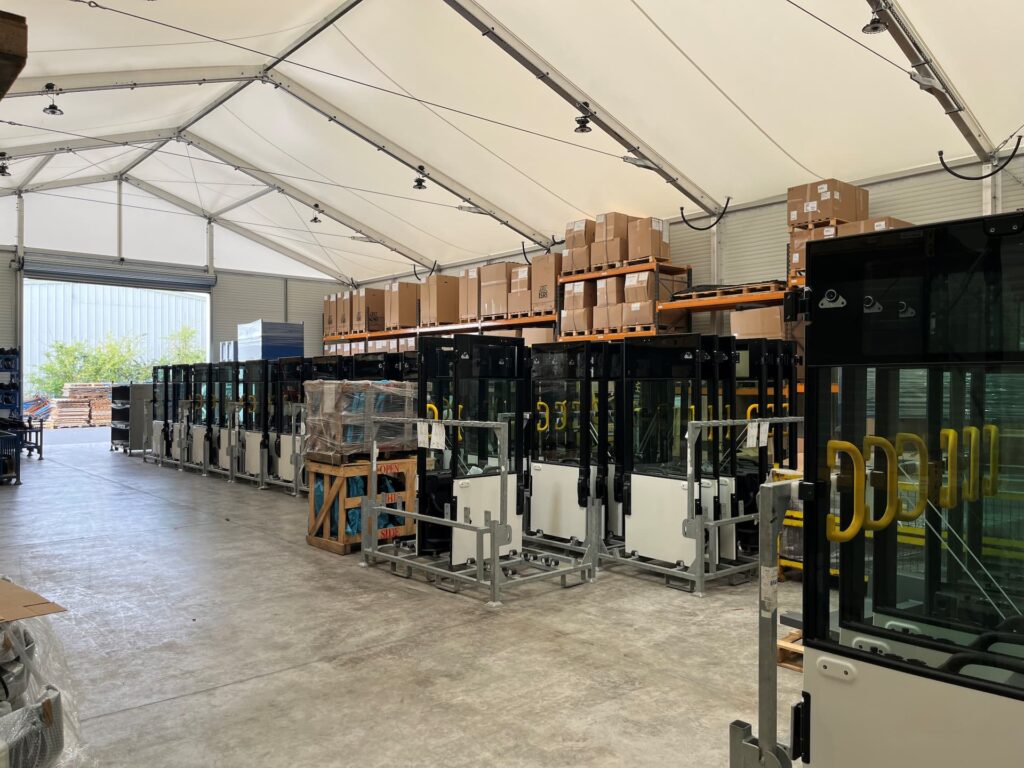
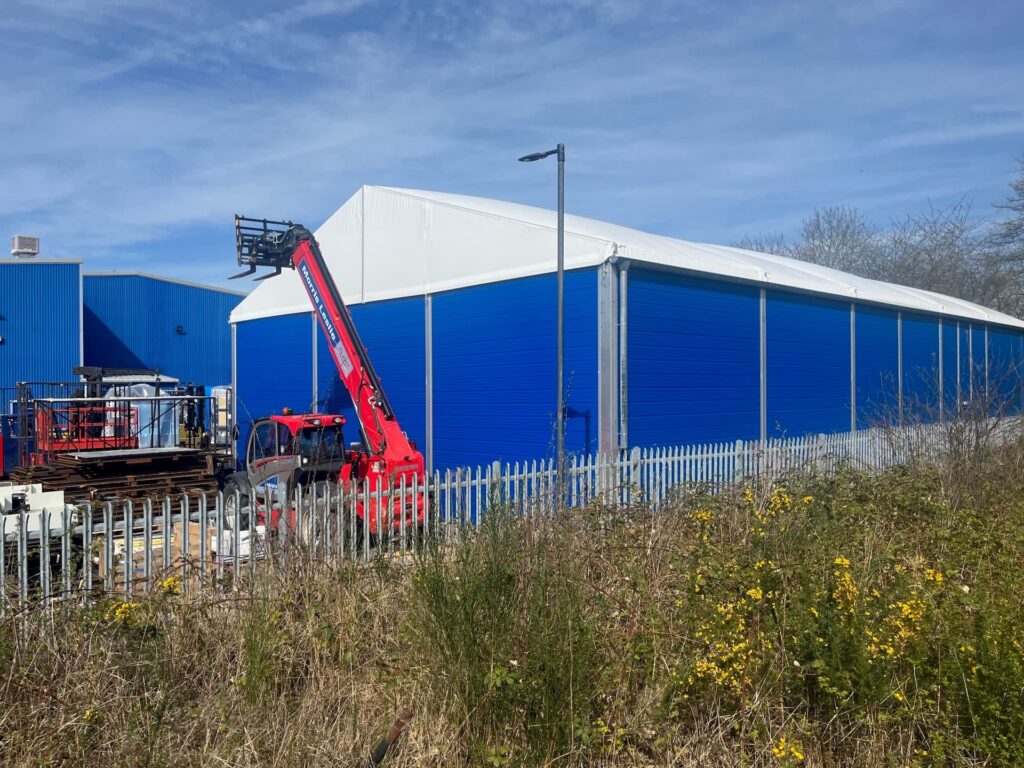
Applications are common in storage, materials handling, production, and as workshops and even exhibition spaces. Insulated industrial buildings are designed for holding goods that need to be stored within specific temperature ranges.
Insulation for these industrial buildings is provided in the following ways:
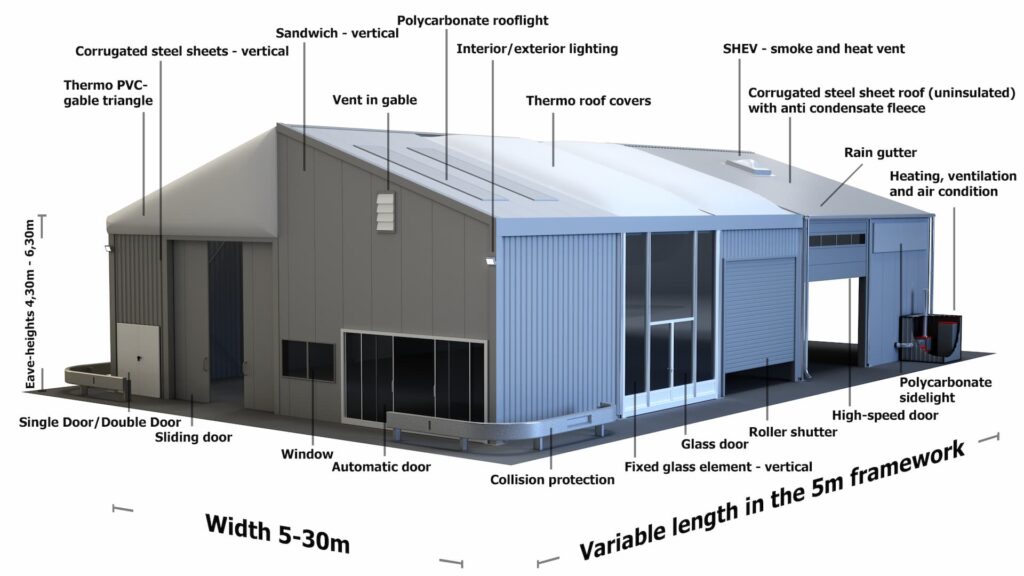
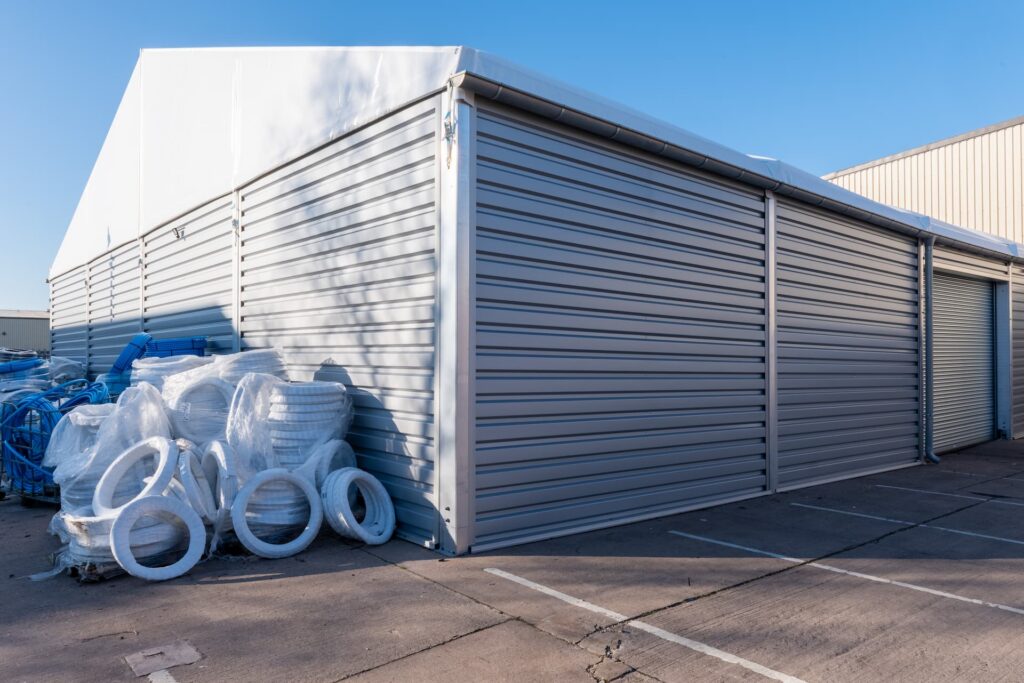
- Highly insulating sandwich panels (40mm-100mm) with corrugated steel outer sheets surrounding a polyurethane foam or mineral wool core are used to make the walls.
- Our industrial strength PVC double-skinned, air-filled roof coverings keep warm air inside the building.
- Pedestrian access doors, roller shutters and windows are all insulated.
- Multiple flooring options complete the insulation.


Get In Touch
Request a Quote
What Are The Benefits Of Aluminium Framed Industrial Buildings?
Each of our insulated buildings is built around an aluminium framework that allows flexible modular construction options tailored to your unique specification.
Wall heights of up to 8.3m allow for high racking, tall equipment and mezzanine floors.
Our insulated buildings can be 5m wide up to 30m wide without intrusive pillars inside the cantilever, self-supporting structure.
Our insulated industrial buildings are built in 5m wall sections. This allows you to specify your building length in 5m increments that is limited only by the space you have.
Foundations are not required.
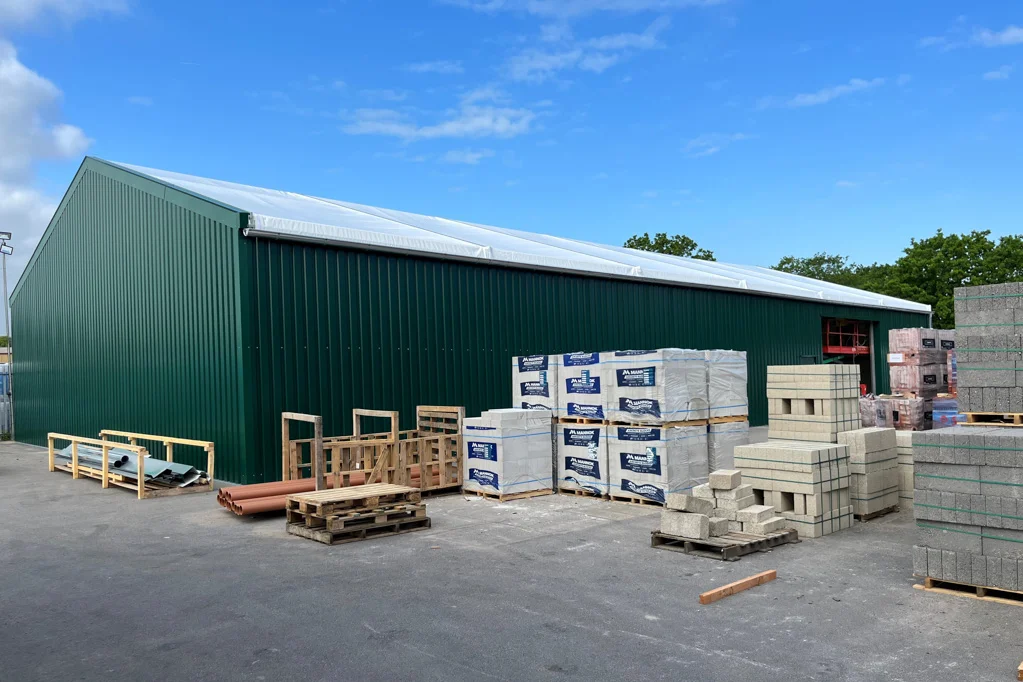
Applications are common in storage, materials handling, production, and as workshops and even exhibition spaces.
Technical Specifications of our Industrial Buildings
Cladding and Anchors
The walls of our insulated buildings are built from foam-filled sandwich panels as standard.
Sandwich Panels (wall)
Our sandwich panels provide a high degree of insulation and are low-maintenance. They consist of two outer steel panels surrounding a polyurethane foam or mineral wool core. These sandwich panels can significantly reduce the energy consumption required to heat the building’s interior. Additionally, our sandwich panels absorb sound well and also provide noticeable sound insulation.
The roofs of our insulated buildings are built from foam-filled sandwich panels as standard.
Sandwich Panels (roof)
Industrial PVC, air-filled thermal roof cladding.
The remarkable properties of the HR-Structures sandwich panels can also be used for roof cladding in addition to wall cladding. Our sandwich elements are available in different material thicknesses and suitable insulation values. We can provide a wide variety of exterior colors.
For maximum stability, our industrial buildings can be with ground anchors or dowels.
Ground anchors
Using ground pegs is the most common and cost-effective way of anchoring a canopy. They can secure a canopy to a wide variety of substrates without any problems. To ensure optimum fastening, the surface layer, base layer and frost protection layer of the ground should total at least 80cm.
Dowels
If the substrate of the canopy is not suitable for fastening with ground pegs, we recommend installation with heavy-duty dowels. Anchoring a building with dowels always requires a concrete or strip foundation, which must be poured in advance.
Examples of our Insulated Industrial Buildings
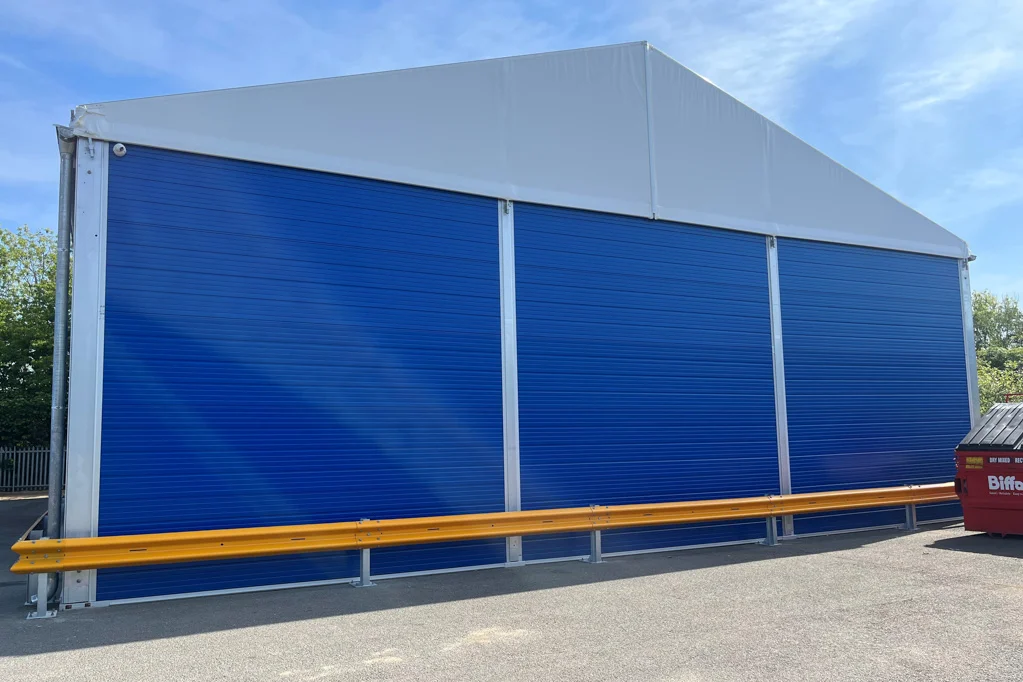
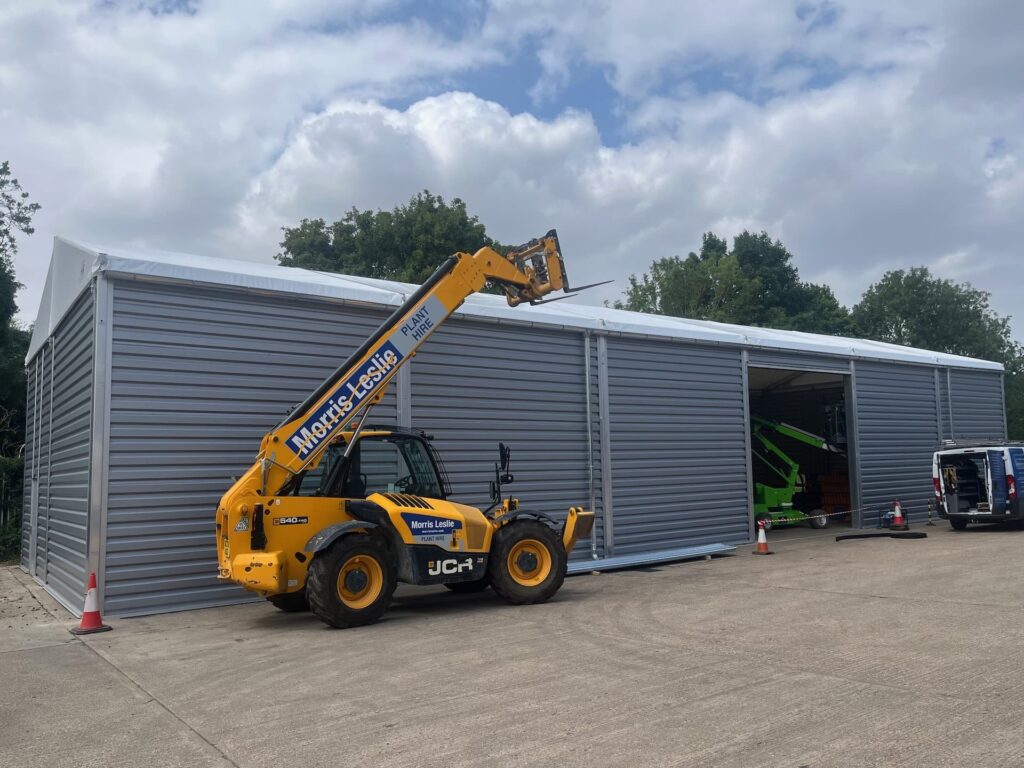
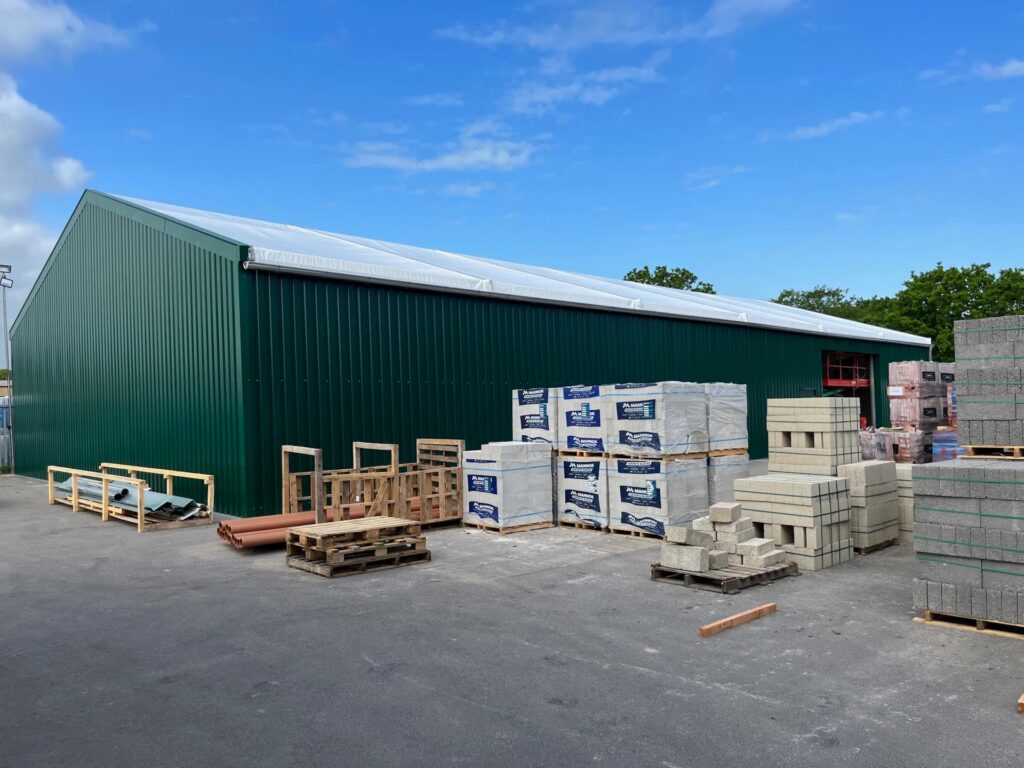
Insulated Warehouse Project 1
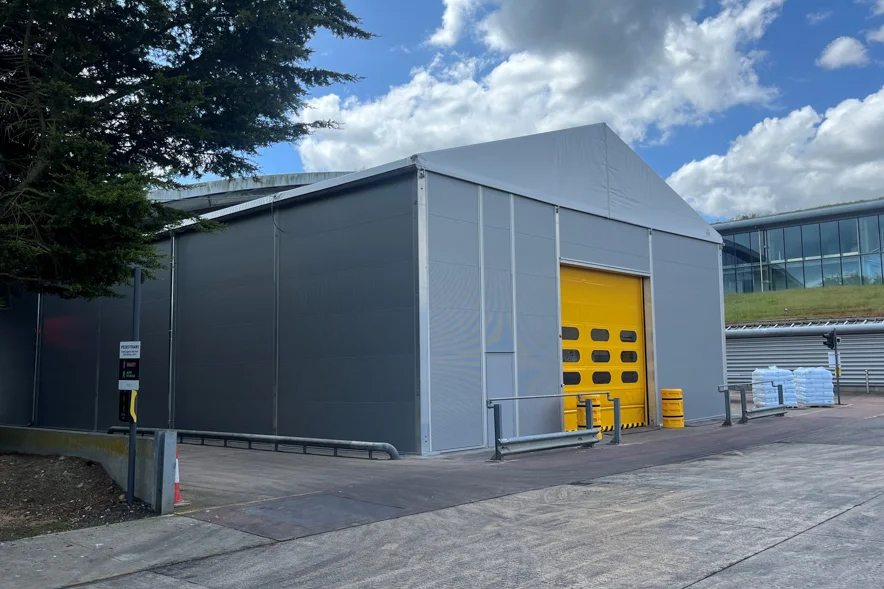
Insulated Warehouse Project 2
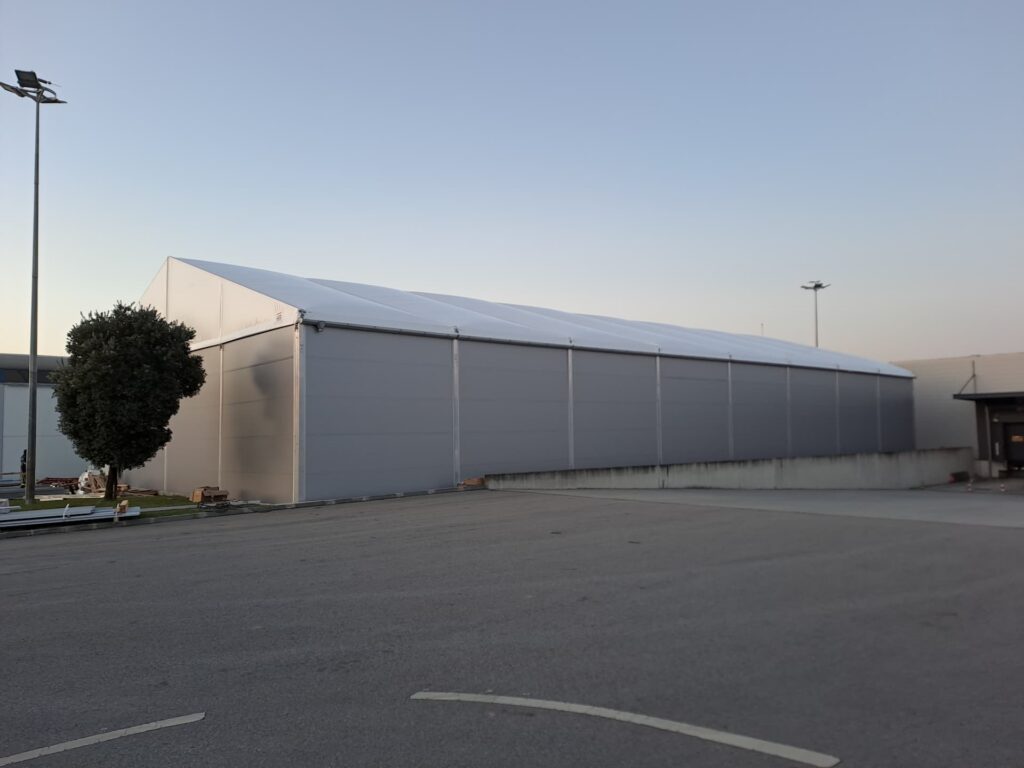
Insulated Warehouse Project 3
Insulated Industrial Building Case Studies
Width:
Length:
Height:
Size:
Width:
Length:
Height:
Size:
Width:
Length:
Height:
Size:
Rent or Buy an Insulated Industrial Building?
You can rent or buy our industrial buildings. Whatever your requirements, we deliver flexible building solutions to meet your needs.
Purchasing
- Full control: Design the building layout based on your business needs.
- Long-term investment: Own a high quality structure for long-term use.
- Customisability: Customize the building access doors, windows and other features.
Benefits of Renting:
- Flexibility: Short-term space solutions without long-term commitment.
- Savings: Lower initial investment costs compared to purchasing.
- Customisability: Maintenance and repairs are usually included in the rental agreement.
The decision between renting and buying should be carefully considered based on your company’s individual needs, financial capabilities and long-term plans. Our experts will be happy to help you decide.
Contact us
We manufacture all of our aluminium framed structures in our production facility in Germany. With a highly qualified team of industry experts, we manage everything from planning, design, manufacturing, delivery to site and assembly of the finished industrial structures.
FAQ
The Important Answers
What Are The Advantages Of Aluminium-Framed Structures?
Why a building made of aluminium?
Our lightweight structures are mostly made of aluminium. This is a sustainable and recyclable material, which is also inexpensive. It provides structural resilience that is comparable to other construction materials. It is also possible to erect an aluminium industrial building without foundations.
What Size Can A Temporary Building Be?
Aluminium framed temporary buildings from HR-Structures can be made with a span between 5m and 30m in 5m increments. The building wall height can be between 4.3m and 8.3m in 1m increments. They can be extended in 5m increments to whatever length you want or have space for. Special dimensions and multi-aisle solutions can be manufactured individually upon request.
How Strong Are Temporary Buildings?
As standard our temporary buildings are designed to withstand a wide range of bad weather. This is based on a wind force of 0.5 kN/m² and a snow load of up to 1.35 kN/m². In more exposed or colder areas our buildings can be specified with stronger components to accommodate higher snow loads and wind speeds.
How Are These Buildings Secured To The Ground?
There are different fastening options that vary depending on the building type, service life and existing subsurface. Generally, where there is no foundation, temporary structures are attached using earth anchors. Where there is a foundation, heavy duty or chemical anchors are used to secure the building and create a fixed structure. Further options such as ballasting or concrete-free foundations are also available. For more information on these, please contact us.
When Do I Need Planning Permission?
Depending on the service life, the building type, how it is anchored to the ground and the local requirements, the requirement for a building permit will vary. For a temporary construction according to DIN EN 13782, the submission of an inspection book is usually necessary and no complex planning permission is required. However, planning permission is usually required for a more permanent structure. The building owner is responsible for obtaining this but we are happy to help. We work closely with a town planning agency that specialises in planning permission approvals.