
Storing Goods Unaffected by Temperature
Uninsulated Industrial Buildings
- Quick, inexpensive solution
- Protection from the weather
- Customisable for multiple industries and applications
- Complete service from advice to finished product
- Manufactured in Germany using high quality materials
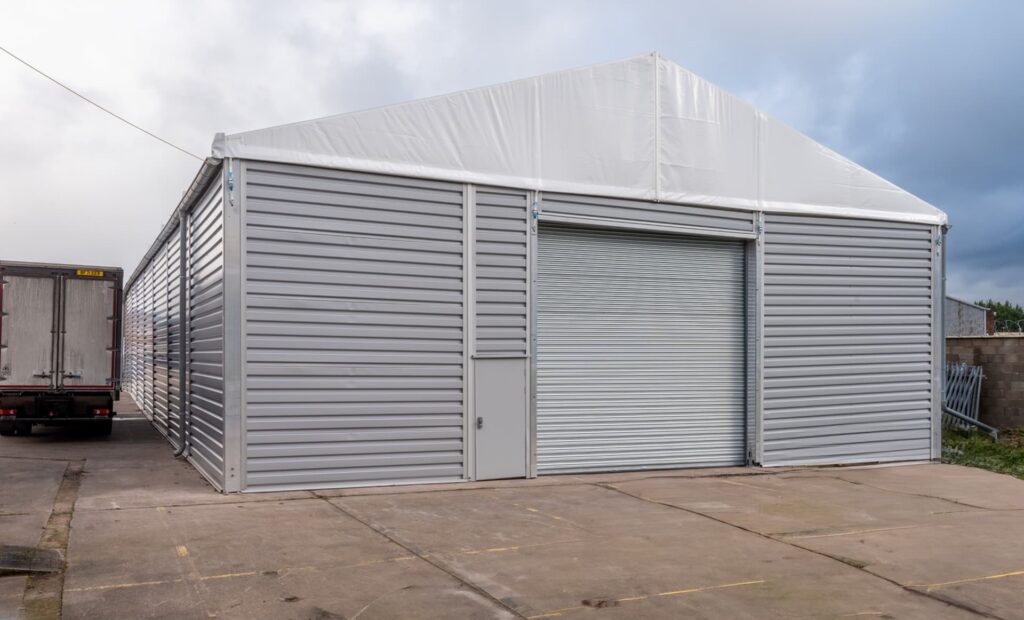
Uninsulated industrial buildings for storing goods unaffected by temperature
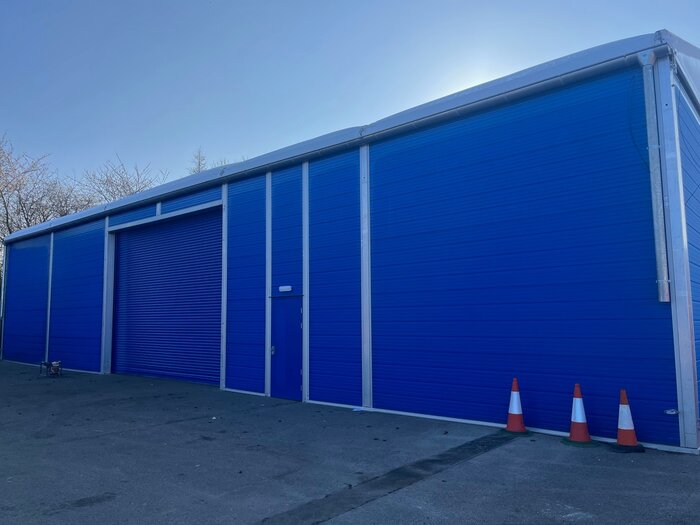
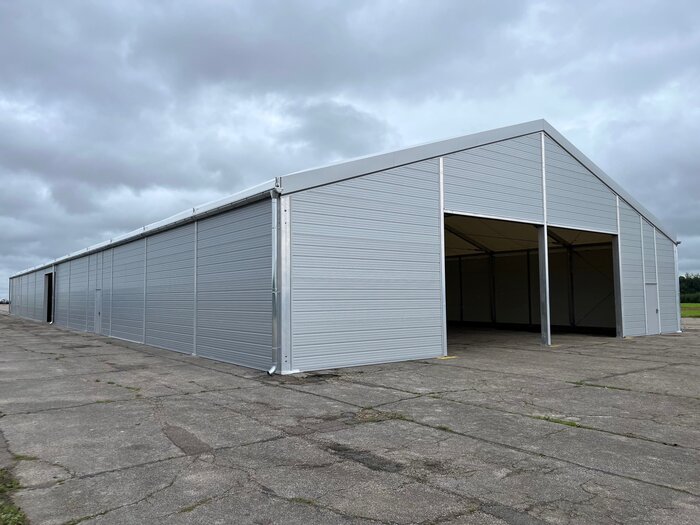
Uninsulated industrial buildings provide the ideal solution for storing temperature-insensitive foodstuff, production parts or other goods safely and reliably.
The uninsulated light metal structures have multiple uses in a wide range of industries, are highly cost-effective and quick to assemble.
Strong PVC coverings for the roof have a long service life, with translucent and opaque options available, as well as a wide range of colours
Get In Touch
Request a Quote
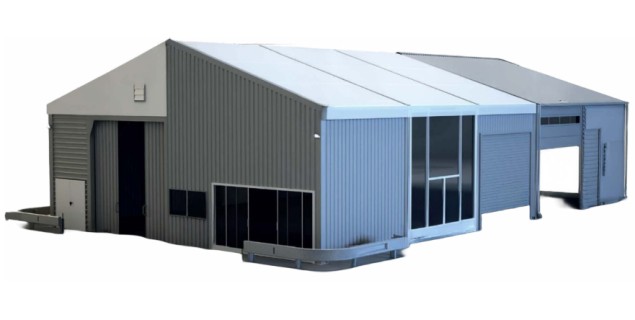
Custom-made uninsulated buildings
Does business expansion mean that you need more storage space quickly and cost-effectively? Our corrugated sheet steel buildings are the ideal choice.
As a family-run company based in Germany, we design, build and erect technically sophisticated building solutions made from high-quality raw materials.
Protect goods that are not affected by temperature changes from the weather in our secure, flexible industrial buildings.
Technical Specifications of our Uninsulated Buildings
Cladding and Anchors
Single skin industrial PVC sheeting
Our robust, single skin roof sheets are the ideal cover for canopies, tunnel structures or buildings where no temperature sensitive goods are stored. The sheets are made from highly tear-resistant industrial strength PVC which is strong, durable and cost-effective compared to other roofing materials. Each PVC roof delivers decades of protection from sun, rain, hail or frost and is specifically designed for the long-term service life. Due to their low weight, PVC sheets can be installed quickly and cost-effectively. This also allows quick replacement should a panel ever become damaged. The translucent material also allows natural light into the building during daylight hours.
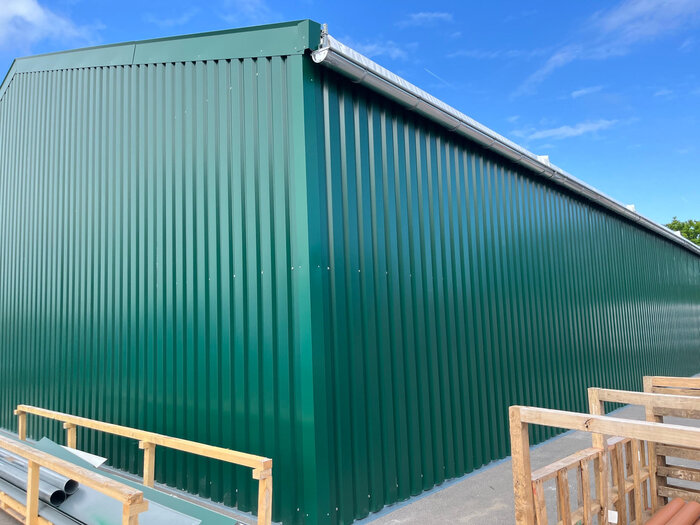
Corrugated Sheet Steel Panels
Corrugated steel sheets are ideal for keeping all weather conditions outside the building. Depending on the desired use and the goods to be stored, the panels are extremely low-maintenance and long-lasting alternative to PVC sheeting.
Double Skin PVC
It is possible to integrate a special inner PVC sheet to protect stored goods from sweat or condensation. The base sheets are inserted under the PVC roofing which does not cause any significant additional effort during assembly of the building. The material consists of mesh fabric, which allows moisture to diffuse out of the building. Condensation is drained away to the side where it is channeled away.
PVC Sheet Underlay With Corrugated Sheet Metal
A base PVC sheet used with corrugated steel panel is the complete roofing solution for our non-insulated buildings. The combination provides the best possible protection against weather and condensation.
Thermal PVC
When a single-skin PVC roof is not enough to control temperature and condensation, the PVC thermal roof from HR-Structures is the best solution. It consists of two sheets welded together at the edges of each panel which can then be filled with air that is highly insulating. The two-layer roof and gable claddings’ heat-insulating effect also helps prevent condensation on the underside of the roof.
The flame-retardant tarpaulin is certified to DIN4102-B1 and can be supplied translucent or opaque in different colours.
For maximum stability, our industrial buildings can be with ground anchors or dowels.
Ground anchors
Using ground pegs is the most common and cost-effective way of anchoring a canopy. They can secure a canopy to a wide variety of substrates without any problems. To ensure optimum fastening, the surface layer, base layer and frost protection layer of the ground should total at least 80cm.
Dowels
If the substrate of the canopy is not suitable for fastening with ground pegs, we recommend installation with heavy-duty dowels. Anchoring a building with dowels always requires a concrete or strip foundation, which must be poured in advance.
Examples of our Uninsulated Industrial Buildings
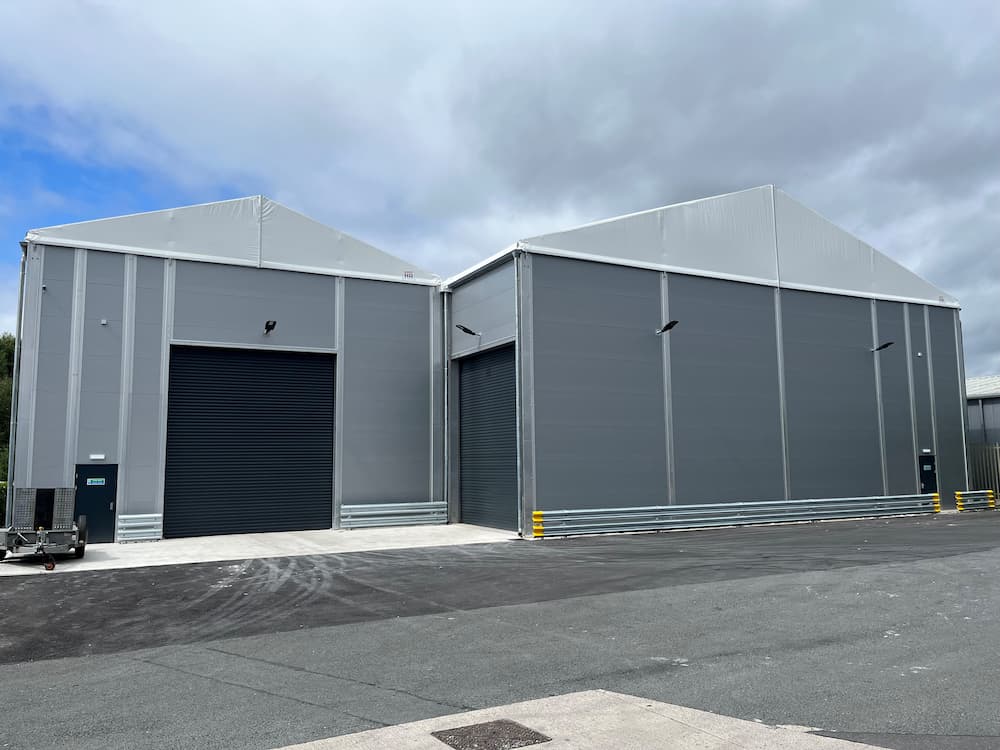
Uninsulated Project
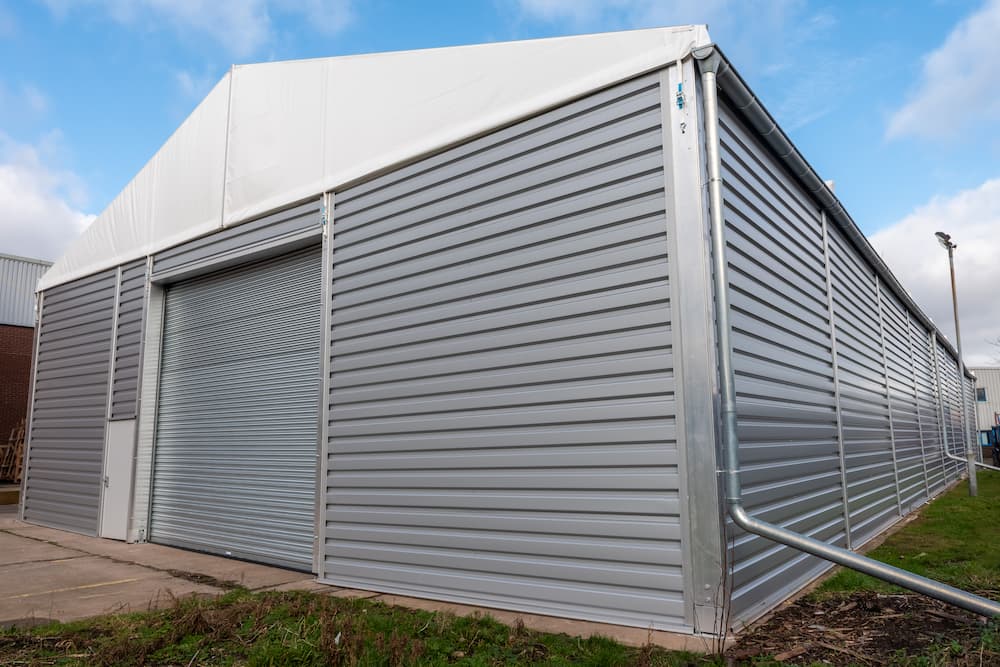
Uninsulated Project
Unisulated Industrial Building Case Studies
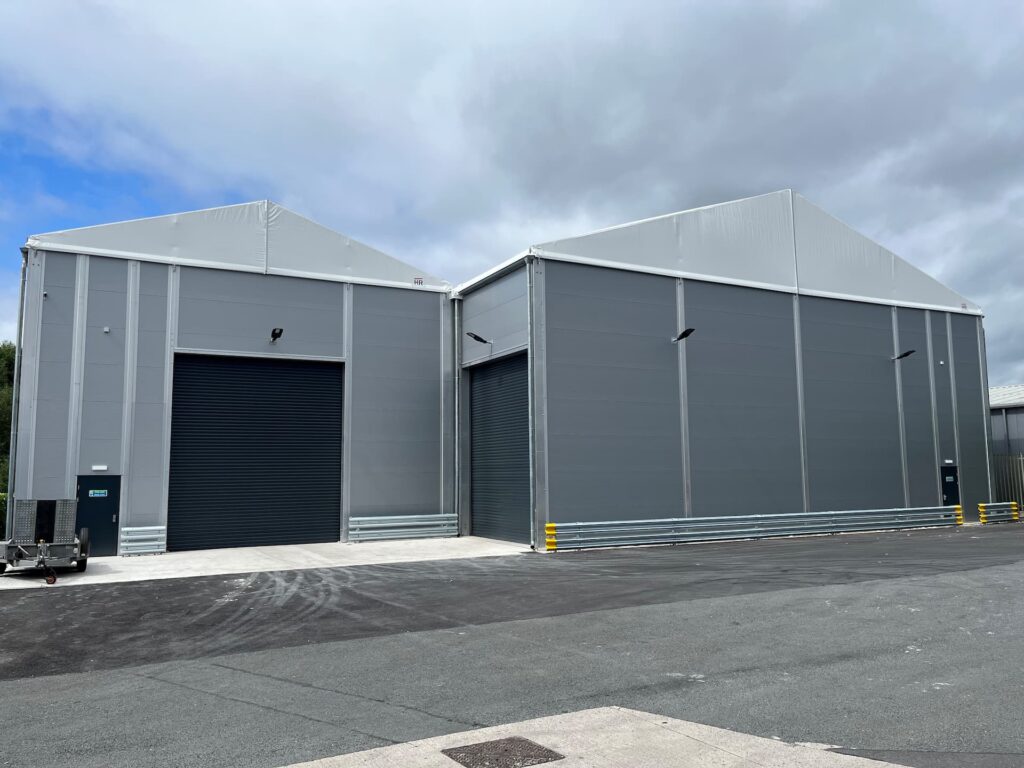

Width:

Length:

Height:

Size:
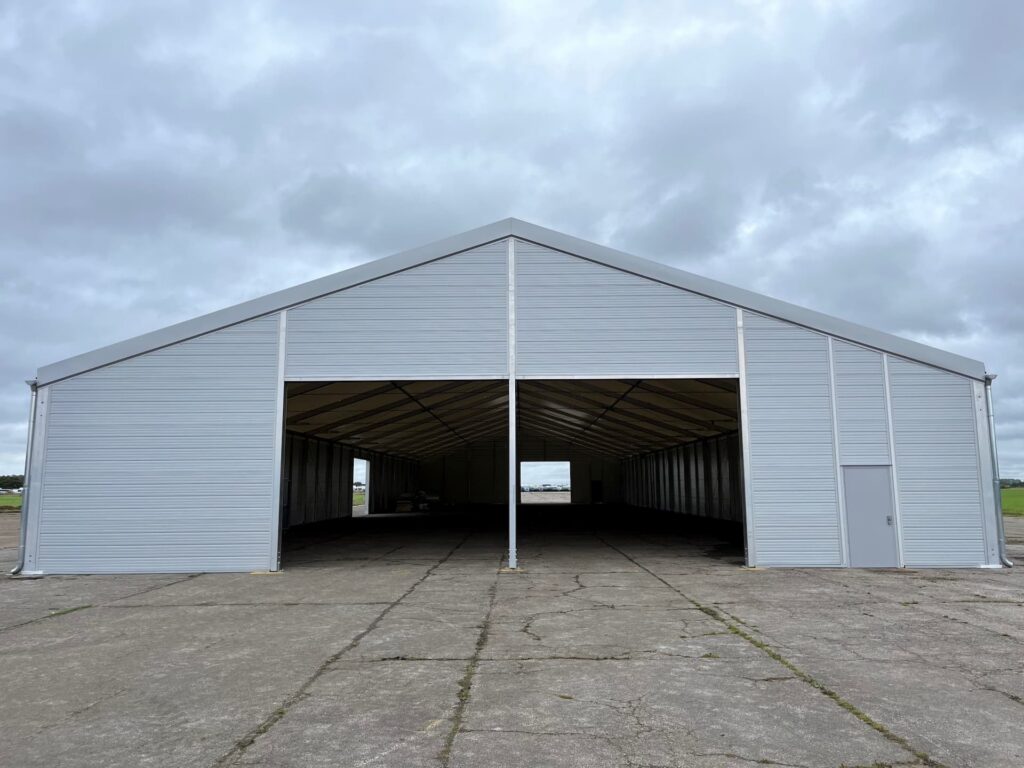
Width:
Length:
Height:
Size:
Width:
Length:
Height:
Size:
Rent or Buy an Insulated Industrial Building?
You can rent or buy our industrial buildings. Whatever your requirements, we deliver flexible building solutions to meet your needs.
Purchasing
- Full control: Design the building layout based on your business needs.
- Long-term investment: Own a high quality structure for long-term use.
- Customisability: Customize the building access doors, windows and other features.
Benefits of Renting:
- Flexibility: Short-term space solutions without long-term commitment.
- Savings: Lower initial investment costs compared to purchasing.
- Customisability: Maintenance and repairs are usually included in the rental agreement.
The decision between renting and buying should be carefully considered based on your company’s individual needs, financial capabilities and long-term plans. Our experts will be happy to help you decide.
Contact us
We manufacture all of our aluminium framed structures in our production facility in Germany. With a highly qualified team of industry experts, we manage everything from planning, design, manufacturing, delivery to site and assembly of the finished industrial structures.
FAQ
The Important Answers
What Are The Advantages Of Aluminium-Framed Structures?
Why a building made of aluminium?
Our lightweight structures are mostly made of aluminium. This is a sustainable and recyclable material, which is also inexpensive. It provides structural resilience that is comparable to other construction materials. It is also possible to erect an aluminium industrial building without foundations.
What Size Can A Temporary Building Be?
Aluminium framed temporary buildings from HR-Structures can be made with a span between 5m and 30m in 5m increments. The building wall height can be between 4.3m and 8.3m in 1m increments. They can be extended in 5m increments to whatever length you want or have space for. Special dimensions and multi-aisle solutions can be manufactured individually upon request.
How Strong Are Temporary Buildings?
As standard our temporary buildings are designed to withstand a wide range of bad weather. This is based on a wind force of 0.5 kN/m² and a snow load of up to 1.35 kN/m². In more exposed or colder areas our buildings can be specified with stronger components to accommodate higher snow loads and wind speeds.
How Are These Buildings Secured To The Ground?
There are different fastening options that vary depending on the building type, service life and existing subsurface. Generally, where there is no foundation, temporary structures are attached using earth anchors. Where there is a foundation, heavy duty or chemical anchors are used to secure the building and create a fixed structure. Further options such as ballasting or concrete-free foundations are also available. For more information on these, please contact us.
When Do I Need Planning Permission?
Depending on the service life, the building type, how it is anchored to the ground and the local requirements, the requirement for a building permit will vary. For a temporary construction according to DIN EN 13782, the submission of an inspection book is usually necessary and no complex planning permission is required. However, planning permission is usually required for a more permanent structure. The building owner is responsible for obtaining this but we are happy to help. We work closely with a town planning agency that specialises in planning permission approvals.